Vegan Pie Crust

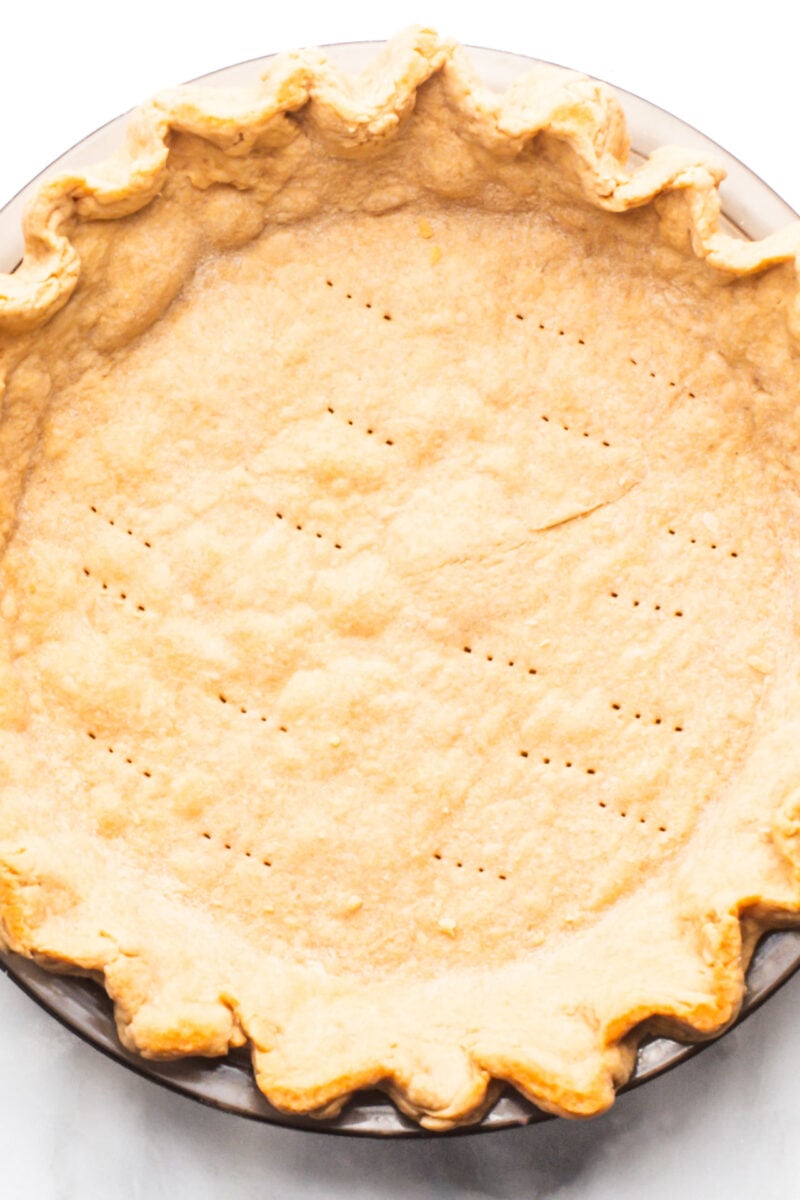
Here’s my guide on how to make foolproof flaky vegan pie crust! Learn my secrets, get my recipe, watch the accompanying video, and even step-by-step photos.
This post may contain affiliate links. Disclosure Policy
You'll also get even more vegan recipes delivered to your inbox every week!
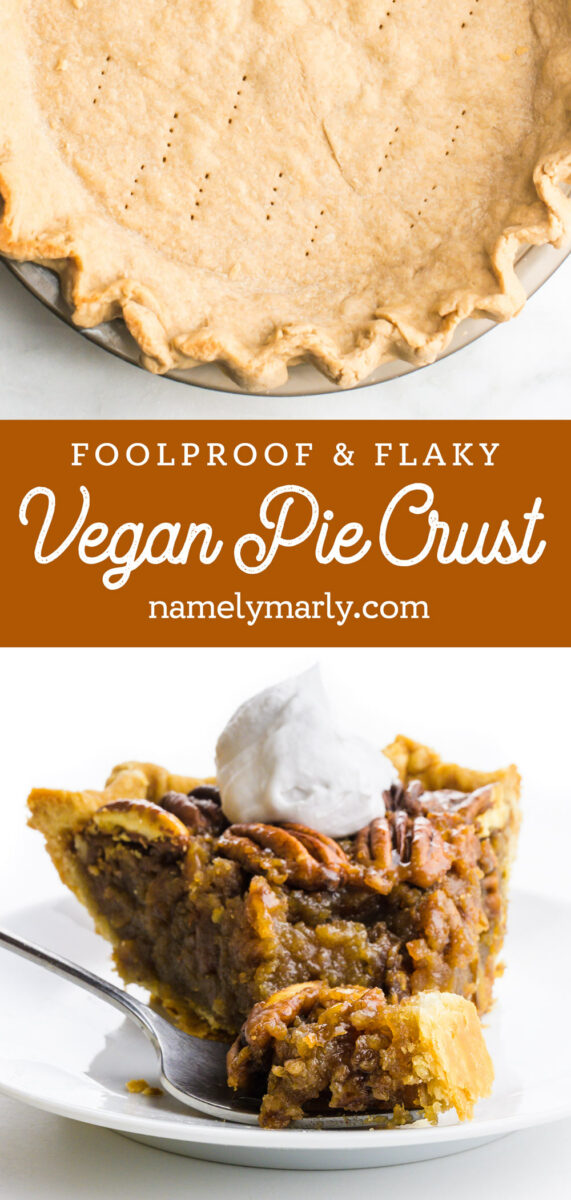
Whether you are baking a seasonal holiday dessert or a cozy weekend treat, a great pie starts from the ground up. You don’t need dairy, lard, or complicated techniques to achieve a decadent, melt-in-your-mouth pastry.
If you’ve ever struggled with a plant-based crust that turned out tough, greasy, or completely crumbly, you’re not alone. This step-by-step guide walks you through how to master an easy vegan pie crust that bakes up into a golden, flaky vegan pie crust every single time.
In this Post
Why This Is the Best Vegan Pie Crust
Achieving a bakery-quality pastry without animal products comes down to a few key principles of baking science:
- The Flakiness Factor: The secret to a legendary flaky vegan pie crust is temperature control. Keeping your ingredients ultra-cold prevents the fats from melting prematurely. When those cold pockets hit the hot oven, they melt and create steam, resulting in delicate, micro-layers of flakiness.
- The Method: Utilizing a food processor allows you to cut the fat into your dry ingredients rapidly, distributing it evenly without overworking the flour’s gluten. If you don’t have one, simple hand-mixing instructions ensure you get the exact same results.
- Smart Fat Choices: Combining plant-based stick butters (for rich flavor) with vegetable shortening or a coconut oil pie crust variation gives you the ideal balance of structure, tenderness, and taste.
Ingredients & Substitutions
You can find the full printable recipe, including ingredient quantities, below. But first, here are some explanations of ingredients and steps to help you make this recipe perfect every time.
Before you begin, gather your core components and set up your workspace with a rolling pin, parchment paper, and plastic wrap.
- Flour: Unbleached all-purpose flour provides the ideal gluten structure. For a slightly nuttier, wholesome twist, you can swap a portion for whole wheat pastry flour.
- Salt: A touch of salt balances the richness of the fats.
- Sugar: A small amount of sugar inhibits excessive gluten development, ensuring your vegan pie dough stays tender rather than tough.
- Vegan Fats: A split of vegan butter and shortening yields the ultimate flaky texture and rich flavor profile.
- Liquid: You need moisture to bind the dough. A mix of chilled water and a splash of cold vodka hydrates the flour without activating too much gluten (the alcohol bakes away, leaving behind pure flakiness!)
What Makes This Recipe Shine?
- Using both vegan butter and vegetable shortening creates a flaky crust with the best buttery flavor
- Adding vodka makes the batter extra flaky because most of the alcohol evaporates in baking, leaving behind the best crust texture
- Keeping the ingredients cold helps to bake a perfect crust time and time again!
Use Cold Ingredients in Pie Crusts
Keeping your pie dough ingredients — like the fat and liquids — as cold as possible prevents the fat in the unbaked pie from getting soft. If the fat gets soft and melty in the dough before baking, you can say bye-bye to a flaky crust.
However, using chilled fat helps it stay intact in the dough. Then as the pie bakes, the lumps of fat melt in the oven and produce steam. That steam helps creates micro-layers of flakiness. I think this may have been what my sisters called me when I was a kid, but I digress.
So, think of it this way, a warm dough will yield a hard, greasy crust, whereas a cold dough will yield a tender, flaky vegan pie crust.
Step-by-Step Instructions: How to Make Vegan Pie Crust
Step 1: Combining the Dry Ingredients
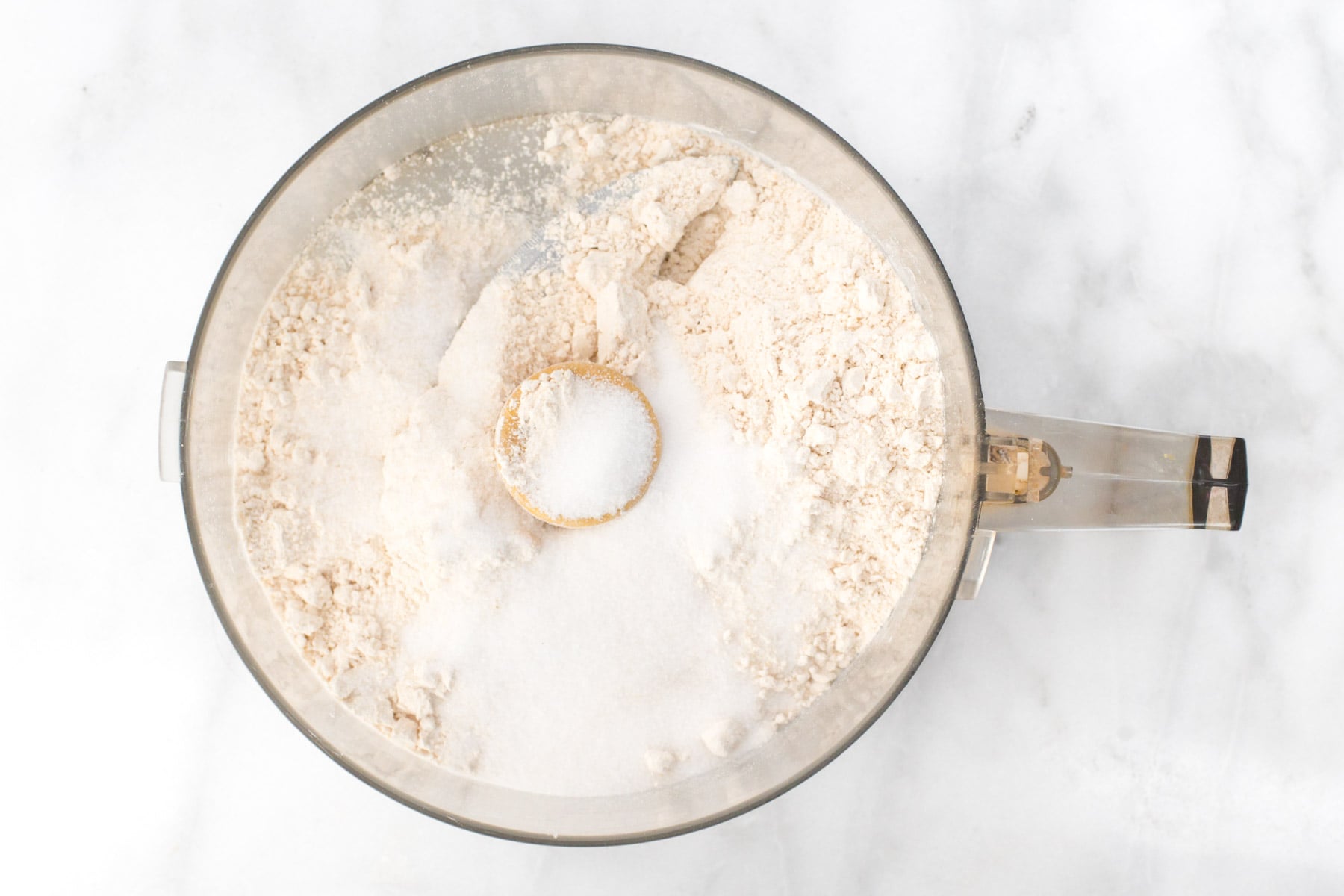
Add your flour, salt, and a pinch of sugar into your food processor. Pulse two or three times just to distribute everything evenly.
Step 2: Cutting in the Fat
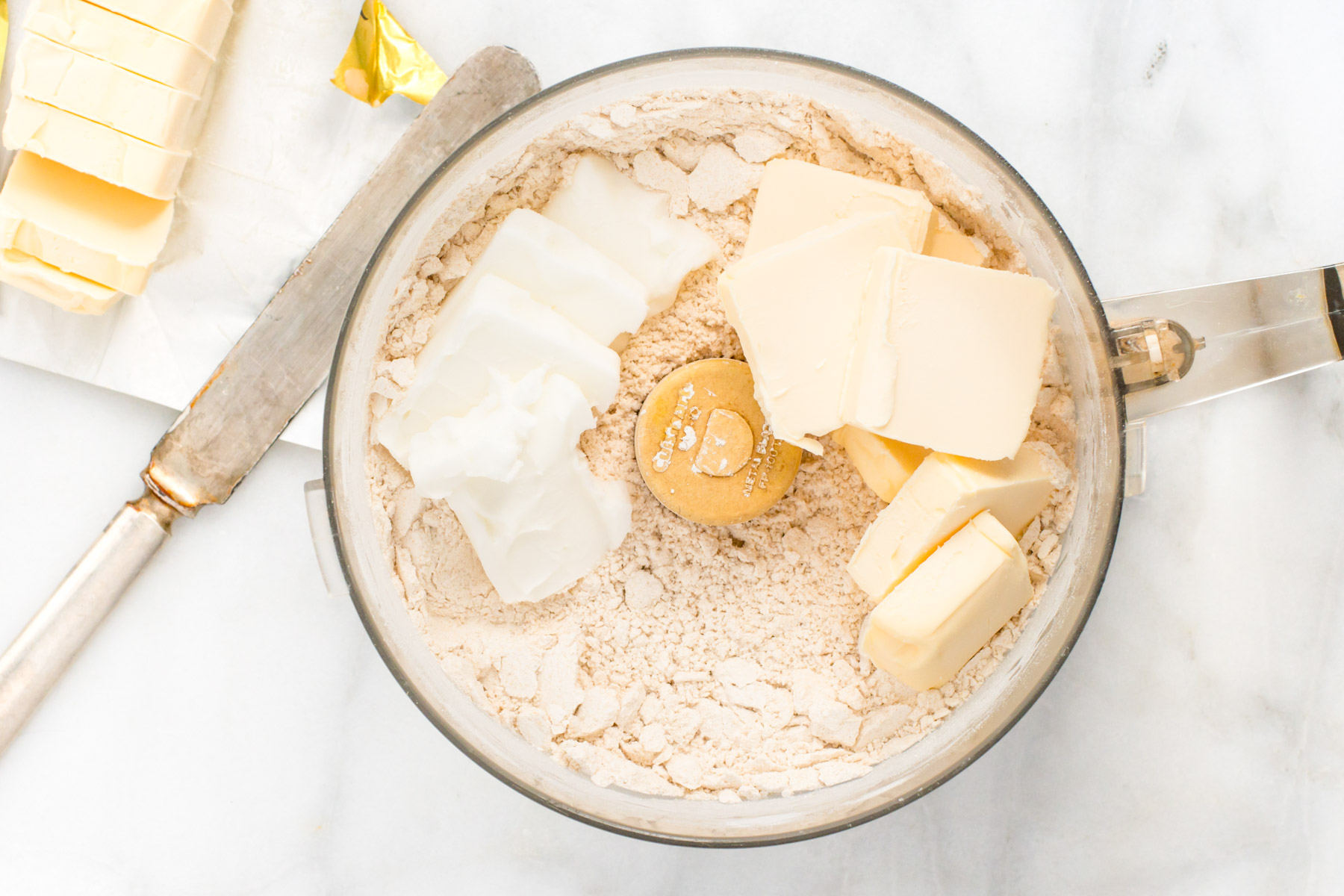
Cut your plant-based butter and shortening into cubes and chill them in the freezer for about 20 minutes before starting. Add the cold fats to the flour mixture and pulse in short, quick bursts until the fat pieces resemble the size of small peas. You want visible pieces of fat left intact!
Step 3: Adding Ice Water & Forming the Dough
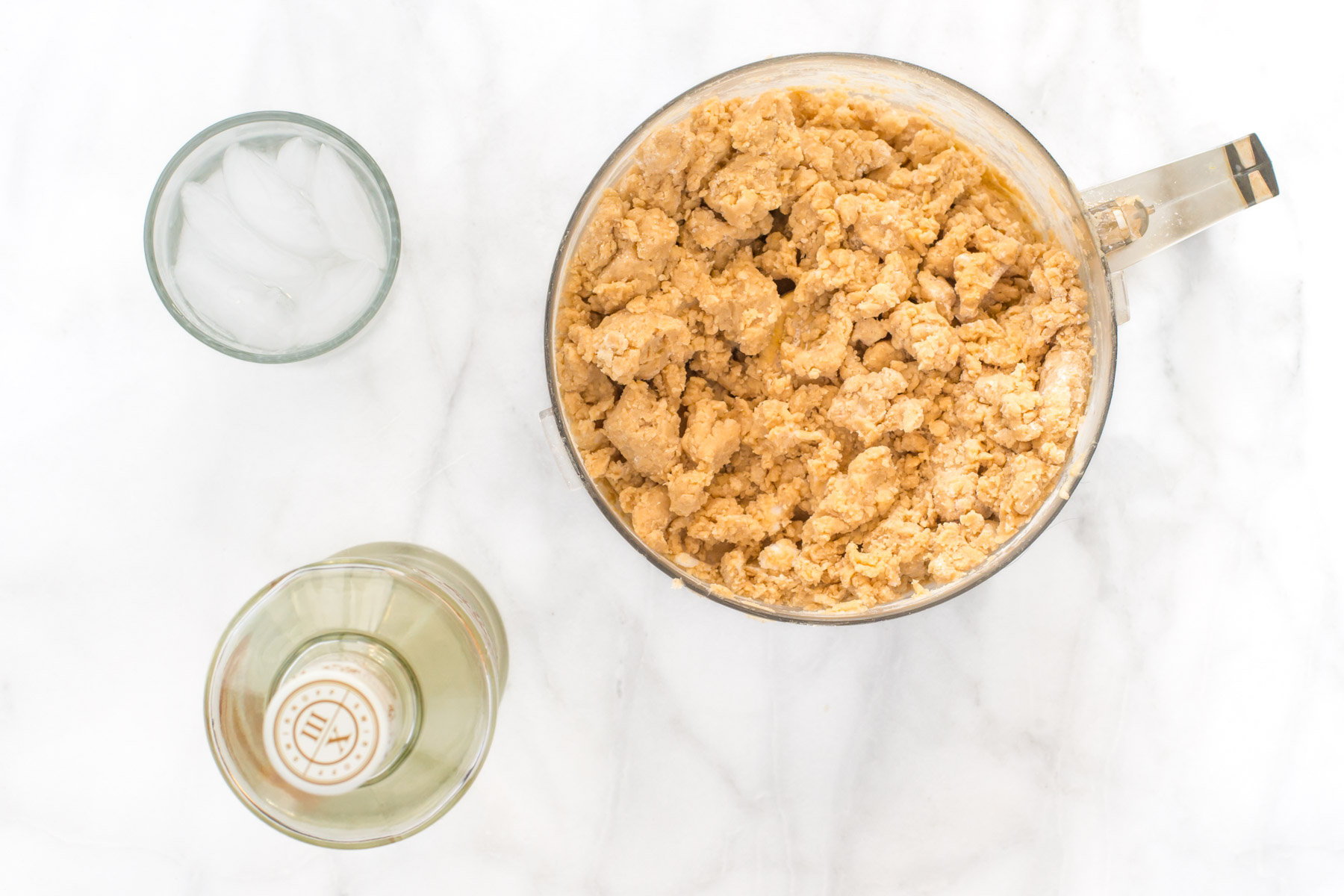
Transfer the crumbly mixture into a mixing bowl. Drizzle your chilled water (and optional vodka) over the mixture one tablespoon at a time. Gently stir with a spatula until the dough is just cohesive and slightly tacky when pinched.
Step 4: Chilling and Rolling
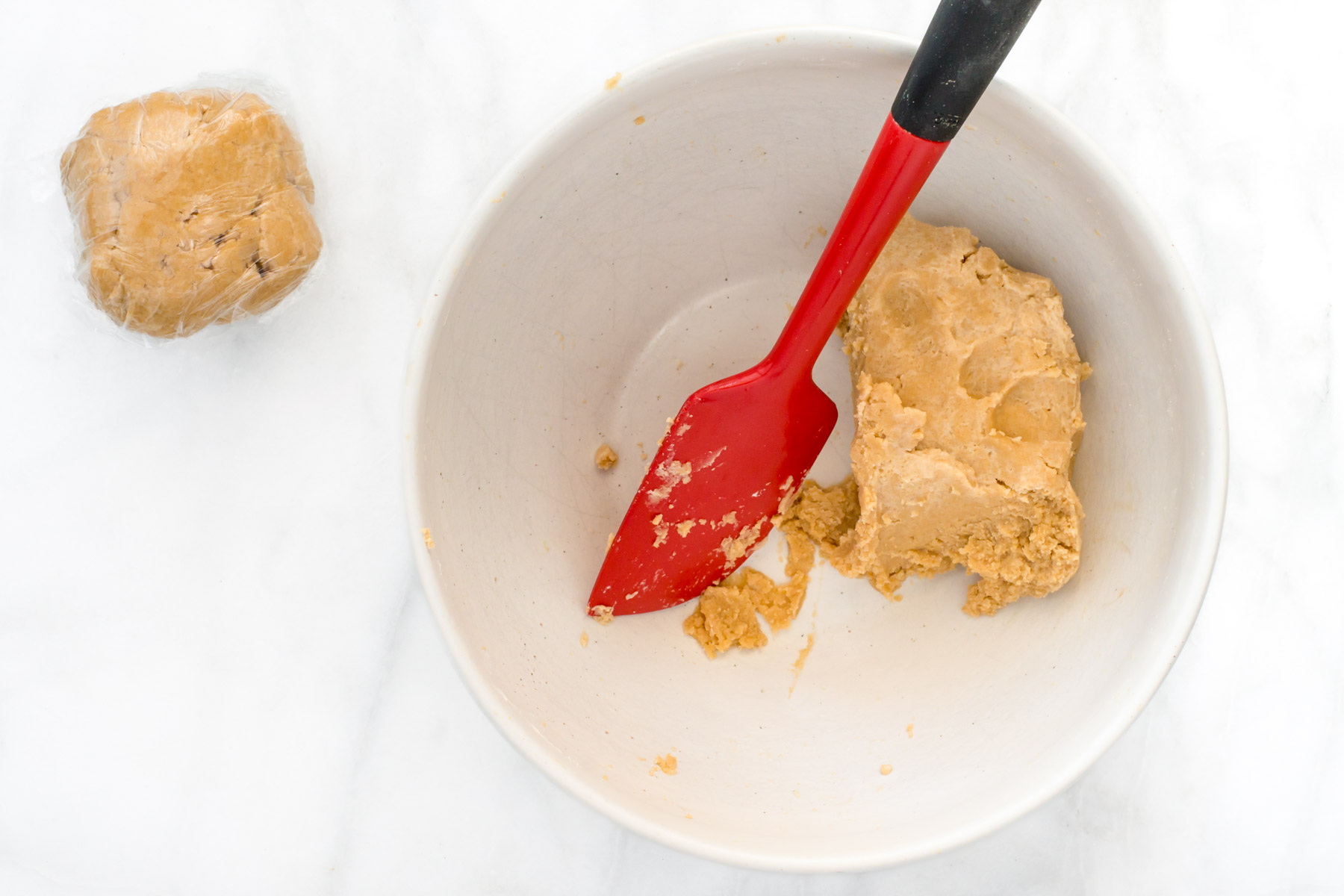
Divide your vegan pie dough in half, shape each half into a flat disk, and wrap them tightly in plastic wrap. Chill in the refrigerator for at least 30 minutes to let the gluten relax and the fat firm up. Once chilled, unwrap the dough, place it between two sheets of parchment paper, and use your rolling pin to roll it smoothly into an 11–12 inch circle.
Pro-Tips for Preventing a Crumbly Crust
- Keep Everything Cold: If your kitchen runs warm, place your food processor bowl and rolling pin in the fridge for a few minutes before you start. Warm dough leads to a greasy texture, while cold dough leads to flakiness.
- Add Liquid Sparingly: Only add as much chilled water as necessary to bring the crumbs together. Too much moisture makes the dough tough, while too little makes it unmanageably crumbly.
- Don’t Skip the Chill: Letting the wrapped dough rest in the fridge is non-negotiable; it solidifies the fat pockets so they perform correctly in the oven.
Don’t have pie weights? Add a sheet of parchment paper over the unbaked crust and top that with some dried beans. I’ve done this and it works!
How to Roll Pie Crust
To roll out pie dough, begin by lightly flouring a surface or you can roll the dough between two sheets of waxed paper.
Either way, just remember to be gentle when rolling your dough. Using a rolling pin, always start from the center of the disc and roll out away from the center. This requires turning the dough frequently. So roll, and turn, then roll and turn. You get the idea.
For a standard 9″ inch pie pan, roll the dough 11–12″ in diameter. Yes, I keep a ruler in the kitchen. Or you can get a pie rolling sheet that gives dimensions.
Then transfer the dough into the pie pan and trim and flute the edges.
Frequently-Asked Questions
Is pie crust vegan?
Traditional pie crusts rely heavily on dairy butter or lard. However, this easy vegan pie crust swaps those animal fats for plant-based alternatives like vegan butter, shortening, or coconut oil to deliver the exact same classic flavor and flakiness.
How do I keep my vegan pie dough from crumbling?
If your dough is breaking apart and won’t hold its shape, it’s likely too dry. Sprinkle your mixture with an extra teaspoon of chilled water, gently press it together, and give it a few minutes to absorb the moisture before rolling.
Can I freeze vegan pie dough?
Yes! Wrap your shaped dough disks securely in plastic wrap and place them in a freezer-safe bag. They will keep for up to 1 month. When you’re ready to bake, thaw the disk in the refrigerator overnight or let it sit on the counter for 45 to 60 minutes before rolling it out with your rolling pin.
Marly’s Tips
- The first thing to remember when you’re making a flaky pie crust is you want to use as little liquid as possible
- I use a combination of both vegan butter (Earth Balance) and vegetable shortening. The vegan butter creates a buttery flavor in the pie crust
- Use a vegan butter that’s firm when cold. If it’s overly spreadable, it will not work for a pie crust.
- Using shortening is an easy way to make a flaky vegan pie crust. However, you can substitute coconut oil
- You can substitute vinegar if you prefer not to use vodka
- Once the dough balls are prepared, you can freeze the dough at that point. Simply place them in a sealed container or in a freezer bag and freeze up to 1 month. Before rolling, allow them to sit on the counter and thaw, about 45 minutes to an hour.
How Do You Make a Flaky Pie Crust?
Pie dough involves pockets of fat surrounded by hydrated flour. We’ll be using a food processor to cut the fat into the flour and then roll it out to make a pie crust. While that crust is baking, it gets flaky because of the layers of fat and hydrated flour throughout the dough.
The best trick to making a flaky vegan pie crust is to minimize the amount of moisture used, while still having enough stickiness to roll it. Using minimal liquids helps create the flakiest pie crust possible. That’s why my favorite trick involves alcohol.
Vodka adds moisture to the pie dough, allowing it to be malleable enough to work with. Of course, most of it bakes off in the oven, leaving a nice, flaky crust.
Vegan Pie Crusts
There are lots of different vegan pie crusts. Let’s discuss some of the options you have for your next vegan pie. For example:
- This Oatmeal Pie Crust is simple to make and undeniably flavorful
- You can create your own Oreos crust, like this one using Golden Oreos, Vegan Banana Cream Pie
- Here’s a healthy, raw pie crust using nuts and dried fruit that is more like a vegan tart: Chocolate Pie Pastry Recipe
- Or you can make a vegan graham cracker crust like this one, Vegan Cheesecake recipe
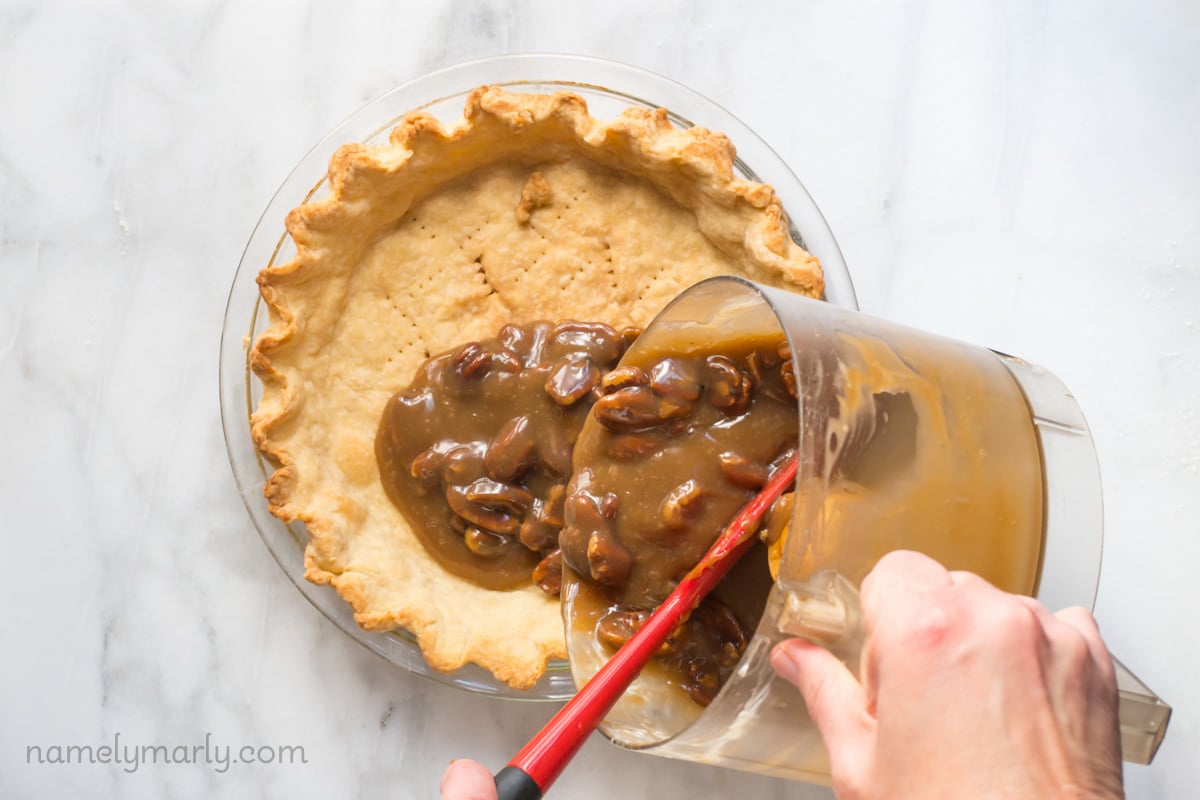
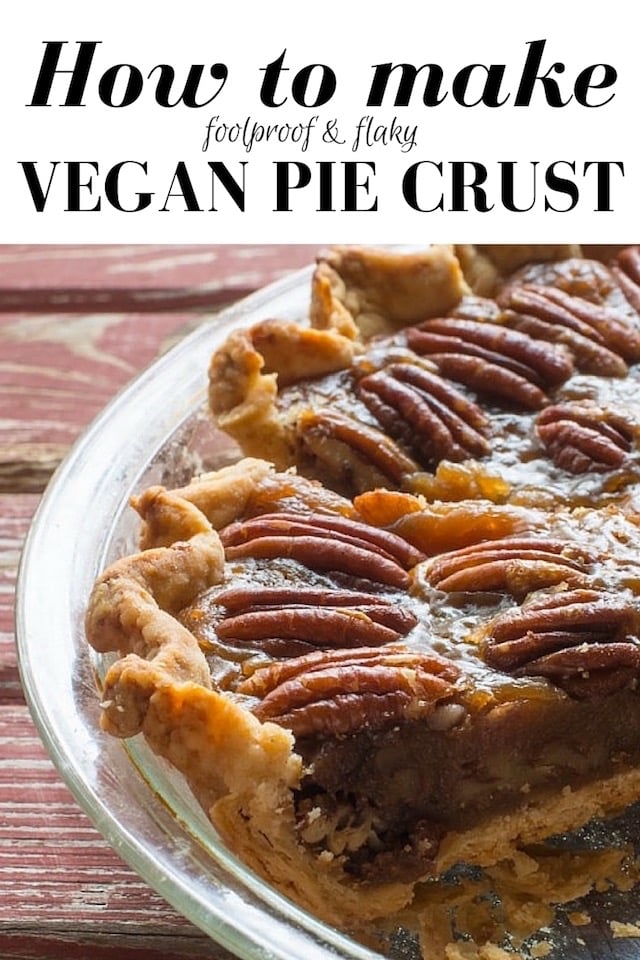
- You can’t go wrong with a flaky crust like this one. This Vegan Pecan Pie recipe shows how to bake your crust with a custard.
So, you see, there are lots of vegan pie crust recipes, including some healthier versions too.
That’s our post for Vegan Pie Crust. Use the recipe below to make your own and stay tuned because there are some pretty fabulous pie recipes coming your way this week.
Subscribe and Get a Free 15-Minute Dinners eBook
Plus our latest vegan recipes, delivered right to your inbox!
We won’t send you spam. Unsubscribe at any time.
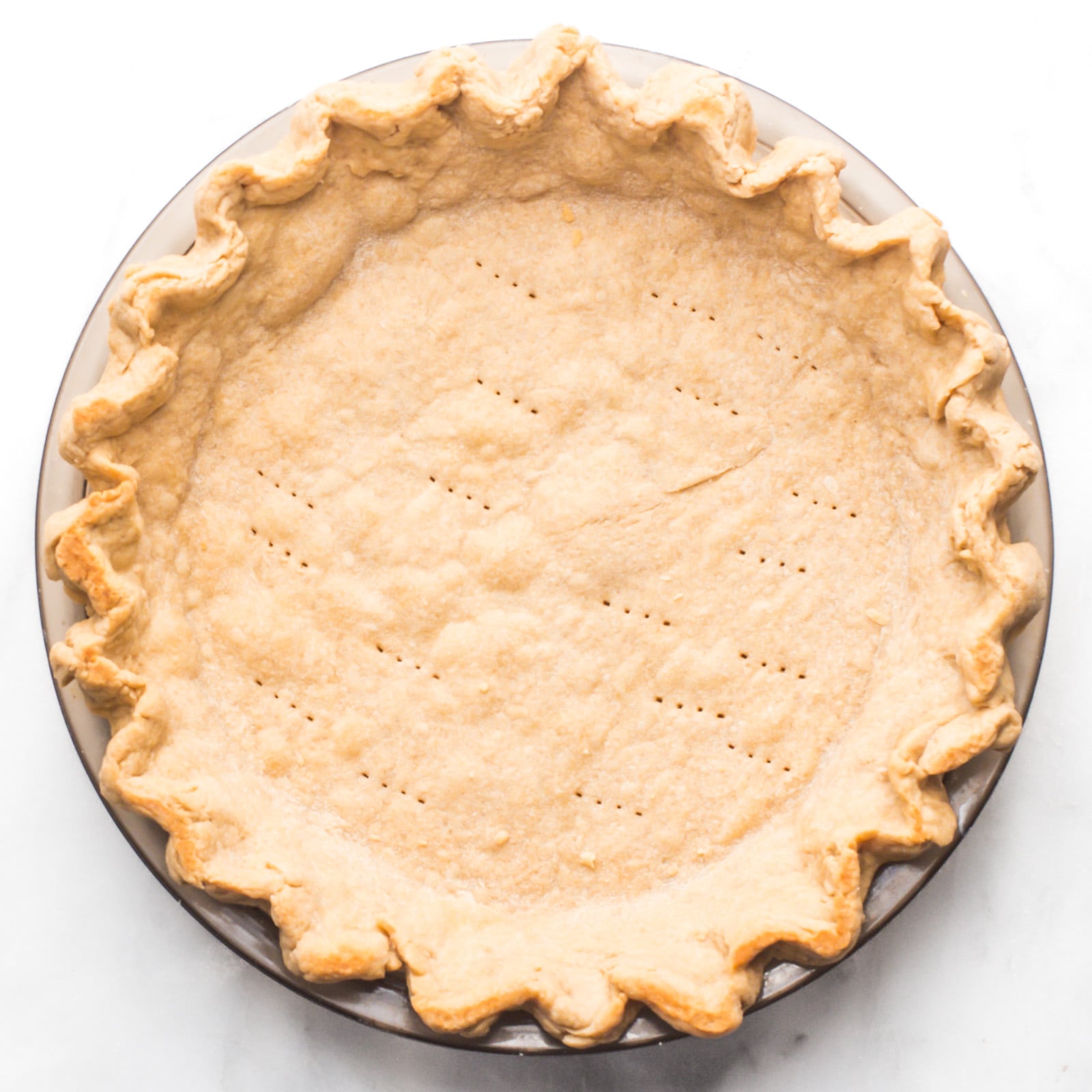
Foolproof Flaky Vegan Pie Crust
You’ll also get even more vegan recipes delivered to your inbox every week!
Ingredients
- 2 ½ cups unbleached all-purpose flour , divided
- 1 teaspoon salt
- 2 tablespoons granulated sugar
- 8 tablespoons (1 stick) vegan butter cut into slices
- 4 tablespoons vegetable shortening cut into pieces
- ¼ cup cold vodka
- ¼ cup cold water
Instructions
- Pour 1 1/2 cups flour, salt, and sugar into a food processor and pulse until combined, about 2 seconds.
- Add vegan butter and process until just combined. Add the shortening slices and pulse until dough collects in clumps, about 15 seconds.
- Add remaining cup of flour and pulse until mixture is evenly distributed (4 to 6 quick pulses). Empty mixture into a medium bowl.
- Sprinkle cold vodka over the dough and stir until combined. Add water, 1 tablespoon at a time until the dough is slightly tacky and sticks together.
- Divide dough into two even balls and flatten each into a 4-inch disk. Wrap each in plastic wrap and refrigerate for at least 30 minutes or up to 3 days. These dough balls can be frozen too. Place in freezer bags and freeze up to 1 month. When you're ready to make the pie, set it out on the counter to thaw for about an hour before rolling.
- From this point, follow the directions for your pie recipe. Some pie recipes will require pouring the custard into an unbaked pie crust whereas others will require baking the crust prior to pouring in the custard.
Recommended Equipment
(The products above contain sponsored links to products we use and recommend)
Notes
Nutrition
The nutrition information shown is an estimate provided by an online nutrition calculator and should not be considered a substitute for a professional nutritionist’s advice.
Enjoy!
This post was originally published in 2015 and was updated to include new photos, new text, and an updated recipe in 2020.
About the Author
Hi! I’m Marly McMillen. I’m the founding editor, author, recipe developer, vegan home chef, and food stylist behind Namely Marly. I’m so grateful to you and every member of my audience for your support and dedication. More about Namely Marly ›
The recipe says to “sprinkle” the vodka…Are we using the entire 1/4 cup?
Hi Karen. Great question! Yes, use the entire 1/4 cup. I could have just as easily said “pour” the vodka, but I use more of a “sprinkle” maneuver. The goal is to spread it across the flour and then stir it minimally. That’s the trick to the best crust, you want to make sure you don’t overwork the gluten in the flour. I hope this is helpful.
Any idea if this will work with gluten free flour? Thank you.
Hi Bridget! I’ve used gluten free baking flour and it has worked just fine!
I have been using a flaky pie crust recipe for decades that uses vinegar. It is an amazing pie crust with absolutely no vinegar taste after baking. Unfortunately, it also calls for an egg yolk so since going vegan, I no longer use that recipe. I look forward to trying yours.
Hey, Marley. I just want to chime in about substituting for vodka in the recipe. I have been using vinegar, which I think has similar properties to vodka. The vinegar, like the alcohol, all evaporates and leaves no residual flavor, but tenderizes the crust. Check it out.
Hi William! Thanks for your comment. It makes sense that vinegar could be a good replacement since vodka is like 30 – 40% alcohol by volume (ABV), whereas vinegar is more like 16%. It probably acts very similarly to vodka in that respect. My husband is one of those super tasters (flavors can be very strong to him) and he absolutely does not like vinegar. I’m going to test your theory by making a pie crust using vinegar and not tell him and see if he notices. If that works, I think we have a winner! Also, did you use Apple cider vinegar?
It would be great if there is a converter to the metric system in the recipes.
Trying it out the recipe at the moment, but had to convert everything to grams first.
Thanks for this feedback, Chrystal. Actually, my recipe plugin does have a conversion option so we will work to figure it out and hopefully have it enabled soon. Ask and receive! 🙂
Thanks! I will let you know how things go!
Hi! This seems like an amazing recipe! Since in baking the proportions are so important, I was wondering if you have any idea how much 1 tablespoon of butter is in grams. I’m from Europe and our sticks of butter are probably also of different sizes. I’m imagining quite a bit of possible variation in quantities and my American cup and spoon templates are easy to use for flour or liquids but seem quite unprecize for something like butter.
Hi Karolien! I know that baking by weight is a much more precise way to go. Maybe someday this country will take a step forward into the metric system. We can only hope! For now, it looks like 1T of butter equals 14.2 g. Does that seem about right? Let me know how it goes!
Maybe I missed it, but is this a double crust recipe for a 9″ pie pan?
Hi Michelle. Yes, this makes two 9-inch pie crusts. If you have 8″ pie pans you’ll just have a thicker crust or some extra crust.
Hi, there! I’m about to tackle your lemon meringue pie for Father’s Day. I noticed that you recommend making your crust a day before the preparing the pie. This might be a stupid question, but do you actually bake the pie crust the day before or just make the dough a day before and keep it in the fridge overnight – baking the next morning?
Hi Amy! Thanks for your comment. Can you show me the recommendation for making the pie crust the day before? I searched both recipes and couldn’t find that. In answer to your question, you have options! You can make the dough balls, wrap and plastic and refrigerate overnight. Then make your pie crusts the same day you’re making the rest of the pie. Or you can make the pie crusts the day before. Typically I will just cover them in plastic wrap and either leave them out on the counter or refrigerate them.
Hi, does Earth Balance contain palm oil?
You can go to the Earth Balance site, click on their buttery sticks, then click on the “nutritional info” to see the ingredients.
Is vodka necessary? We don’t drink and I don’t want to buy vodka?
Hi Samantha. I use vodka in my pie crust because it adds wetness to rolling the dough, but evaporates during the baking process, leaving a very flaky crust. I sometimes can find vodka samples for sale in the alcohol section of our grocery store, just in case you’d like to try it. Also, vanilla extract is basically the same alcohol content as vodka. That said, I understand if it’s hard to get past the stigma of buying vodka. You can just use water instead, but it won’t be quite as flaky a crust. If it were me I would use the 1/4 cup of water and then maybe one to two tablespoons of water to replace the vodka. I hope this helps!
Hi. Could I replace the butter and shortening with a nut butter like walnut or almond ? How much of those would you use ? Don’t get the vegan butter or shortening here in India!
Hi Nomita. Thanks for your note! My first reaction is that a nut butter would not work in this recipe. Do you have coconut oil there? I would try that before I would try a nut butter. However, you could make a different kind of pie crust. For example, I made this pie crust from figs, nuts and cocoa powder. I loved it! That said, I have not tried using a nut butter in this pie crust recipe and so it might be worth a try. I can’t imagine it would result in a typical flaky crust, but it might result in a decent crust. You have me intrigued!
Hi! If I want to substitute coconut oil as the fat in this recipe, how much should I use? Thanks!!
Hi Leah, Thanks for stopping by! I have never used coconut oil in this pie recipe before (or I should say “yet” because it’s gonna happen! ), but when I sub coconut oil for other fats I use a 1:1 ratio. So I would recommend using the same amount of fat as in this recipe. Hmmm. Now that I’m thinking about this, here’s what I would do. I would melt the coconut oil and then measure out the amount I need and then refrigerate that. You want the fat to be cold, but coconut oil is so hard that it would be difficult to scoop out the proper amount. Hope this helps!
Your blog notes mention using “equal parts shortening and vegan butter”, but your recipe lists portions that are not equal. Can you tell me which is correct? Thanks.
Hi Shelly. Thanks for your comment! The recipe is correct. I believe I experimented with using equal parts and eventually found this ratio to work best. The content has been updated to reflect this. Thanks for your feedback! ❤️
Hi I’m fascinated by your lemon meringue pie and I wanted to give it a try but I don’t really understand the difference between vegan butter and vegan shortening. I don’t think we have such products here in Italy. Could you explain what they are? Could I just substitute them by a vegan fat? Thanks
Hi Anna! Nice to meet you. We use Earth Balance Buttery Sticks, and we refer to it as “vegan butter.” It doesn’t have trans fat which makes it a healthier, dairy-free option. I imagine you could also use coconut oil in this recipe, but you’d want to use refined coconut oil unless you’re ok with a coconut flavor to your lemon pie. Let me know how it goes! In bocca al lupo! 🙂
I have made this vodka pie crust as developed by America’s Test Kitchen. The recipe is nearly identical except in the amounts of vegan butter and shortening. How could this be? You use 1/2 the amount as the traditional recipe.
Hi Karol. Thanks for your comment. I wasn’t aware of the ATK version of this recipe. I created it based on a combination of my mom’s recipe I grew up making with her and I learned the vodka tip from 101 Cookbooks. I’ve made this recipe countless number of times and feel like it’s nice and flaky…exactly how we love a good pie crust. Hope this is helpful!
I’m sure you covered this somewhere in your blog, but where do I buy vegan butter in stick form? I’m definitely making this once I solve the vegan butter issue. Also, do you use something like Crisco for the shortening? Thanks!
I typically use Earth Balance which you can find at most health food stores and I can find it at all my local grocer stores. I have yet to see it at places like Target or Walmart, but I’m sure it will be there soon enough. You can also use unsalted Fleischmann’s margarine. The salted variety has dairy in it, but not the unsalted for some reason. Earth Balance also makes vegetable shortening which is great, but otherwise you can use crisco for the shortening.
Hi, have you ever frozen this dough? I really like the idea of making double the dough so I can save time for a pie at another time, and it would be great if I could freeze this too. I’m only asking because of the vodka in the recipe and wonder if it would be affected by being in the freezer.
Hi Amy. Yes, I have frozen this dough before and it works like a charm! What I do is follow the recipe through to creating dough balls and wrapping in plastic wrap and refrigerating them. Once the dough has firmed up, simply put the dough balls in a freezer bag (for added protection) and place in the freezer. Then when you’re ready to use it, place it out on the counter to defrost before rolling it. Good luck!
So I’m gearing up to make the pecan pie later today – since it’s an open top pie would I halve this recipe? I’d make two pies, but we already have another!
Hi Thea! Yes, this recipe makes enough for two pie crusts so you may want to halve it if you’re only making the pecan pie. Alternatively, you’ll have a pie dough ball in the fridge. We have one right now and I’m itching to make some vegetable stew and put a layer of crust over the top for a quick pot pie. That will have to wait until after Thanksgiving…but doesn’t that sound so good!! 🙂
What temperature do i bake this?
Great question Kimberly! I added a note to the recipe to clarify this, but after you make your dough balls and refrigerate them, you should follow the instructions for the particular pie recipe you’re making. For example, my vegan pecan pie recipe indicates baking the pie crust first. But a typical pumpkin pie will ask that you pour the filling into an unbaked pie crust.